Tuesday, March 3, 2020
 With some forethought and balance to the daily workings of the practice, you should be able to have the right staffing for your unique and exceptional working environment. Here are some tips from Dr. James Anderson that can help achieve that balance.

 In this podcast, we talk to Judy Pacheco, a dental assistant who works for Aspen Dental in Massachusetts. We ask about some of the myths and questions that are out there about work conditions within a dental service organization (DSO) and why she chose to leave a general practice to work at Aspen.
 Three patients who claim they were infected with hepatitis C and HIV from dirty dental instruments are suing the public health clinics in Texas where they underwent procedures, according to a news report.
Monday, March 2, 2020
My experience applying to endodontic residencies
“Don’t be surprised if you don’t get in this year,” the endodontic resident told me during my one-day externship. This was not the first time I’d heard this during the application process. This sentiment came from endodontic residents, faculty members and program directors — and for a relatively good reason. Several endodontics programs actually require a year or more of general practice residency or practice experience prior to matriculation into a program.
One of the hardest parts of the application process was determining which schools accepted dental students right out of school. Some programs will explicitly state whether or not a one-year GPR/AEGD is required, either on their website or PASS profile. Other programs may say a year of additional experience is recommended or highly recommended. Or the program may fail to comment, leaving the applicant to decide whether it is worth the application fee to find out (to me, the answer was yes; it was worth it).
Once the applicant has compiled his or her list of programs, the application process is fairly straightforward, with the majority of programs participating in ADEA PASS. I started the PASS application the day it opened and submitted just two weeks later. Endodontics programs are notorious for interviewing early and the earlier one submits their application, the earlier they may be offered an interview.
My first and last interview was on July 15, 2019, at Texas A&M College of dentistry in Dallas. I was fortunate to have been selected for a position in the class beginning July 2020. Some would say I beat the odds or I got lucky because “it’s hard to get into an endodontics program right out of dental school.” Having gone through the process, I have to agree that, yes, it’s hard to get in. But it’s also far from impossible. Here are a few tips I learned along the way:
- Believe in yourself. This is the biggest piece of advice I can offer. Had I listened to everyone who had told me I wouldn’t get into endodontics residency right out of school, I probably would have proved them right. I knew I wanted to pursue endodontics, had confidence in my application, and because of my passion for the specialty, I was sure I would succeed in residency if offered a position. I took this confidence with me into my interview and walked away with a position offer.
- Apply broadly. If you had asked me a year ago, “Where do you think you will end up for residency?” the answer would have been, “Somewhere in Boston.” Similar to college and dental school, a lot of us tend to apply to programs that are close to where we are from. I figured I would end up at a program in Boston, Connecticut, New Jersey, New York or Philadelphia. All of these programs are just a car ride away from my hometown of Jamestown, Rhode Island. However, by applying to programs a plane ride away, I opened up options and increased my chances of getting into a program.
- Learn as much as possible about the field. This can be through shadowing endodontists in private practice, assisting residents at your dental school, participating in externships, attending the American Association of Endodontics (AAE) Annual meeting or reading the Journal of Endodontics (JOE) in your free time. The more you know, the easier time you’ll have answering the dreaded but expected interview question: “Why endodontics?”
Good luck to everyone applying this cycle!
~Jessica Rudman, Connecticut ’20, ASDA Contributing Editor


 Every year, we take a week in March -- Dental Assistants Recognition Week (DARW) -- to celebrate the dental assistant. Dental assistants show up for their practice and patients every day to ensure patients have the safest dental visit possible.
 Continual improvement only takes place when there is some level of focus. Try to find three things that you will improve in your practice in the next 30 days, advises Dr. Roger P. Levin in his latest Practice Success tip. They can be little things or big things, but continual improvement is one of the major keys to long-term success.
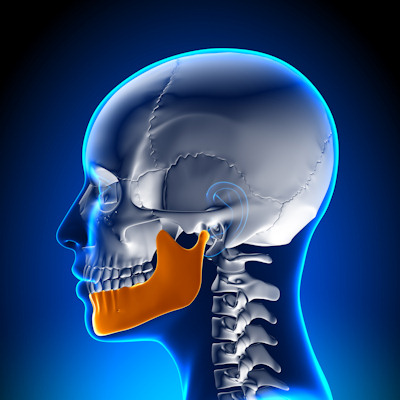 An oral cancer survivor in India regained his ability to eat solid foods after undergoing reconstruction surgery to place a 3D-printed titanium jaw, according to news reports. This successful surgery highlights the benefits of 3D printing technology.
Subscribe to:
Posts (Atom)