Wednesday, March 4, 2020
 It is hard to know what impact the novel coronavirus and the COVID-19 disease will continue to have over the days and weeks ahead, but dental professionals and all people need to know certain information to stay as safe as possible. DrBicuspid.com has compiled resources and statements on everything from proper mask usage to potential mask shortages.

From hockey player to dental student
When one thinks of a typical hockey player, they picture a player smiling with no teeth. Maybe they aren’t completely edentulous, but it is not uncommon for hockey players to be missing central or lateral incisors. Maxillary anteriors are arguably the most significant aspect of one’s smile and overall esthetic appearance, and they play a major role in incisal guidance and occlusion. However, hockey players are known for not prioritizing the protection of these teeth.
According to a study published in the Journal of Dental Hygiene in 2008, while 93.8% of study participants from American Hockey League (AHL) teams had been advised to wear a mouthguard (the most common reason being that it was mandated by the league), only 8.7% of goalies actually wore one. Defenders and forward players, however, had a higher compliance of mouthguard use, reported at 66.4% and 74.8%, respectively.
Hockey players that do not wear mouthguards risk severe oral trauma. The most common of hockey-related dental injuries include chipped teeth, avulsed teeth and fractured teeth, according to the Journal of Dental Hygiene study.
In Burlington, Vermont, I played four years of NCAA college hockey at the division three level, and although I wore a mask for my entire hockey career, the link between dentistry and ice hockey became a life-changing realization for me as I decided to pursue dentistry as my career.
As a student athlete in undergrad, most days were mentally and physically trying. I was attempting to balance a predental education with a demanding training regimen during the off-season and long days on the ice during the season. Whether I was studying for a midterm or traveling for an away game, every hour of my day was budgeted. I relied on my lab partners or my teammates to support me, so I could be the best version of myself when it came to the success of our group or team. Being a student athlete forced me to persevere through adversity and foster mental toughness, traits that are also helping me in dentistry.
My struggles in dental school remind me of the adversity I endured during academic courses and ice hockey games in undergrad. Even though I am thousands of miles away from my college town, I strive to persevere, like I was while I was a student athlete. Playing ice hockey and being a predental student taught me that there is no time for self-pity, but there’s always time to improve yourself. It also taught me how to create and lean on a support system, whether it be teammates or fellow dental students.
Now that I have been in the clinic treating patients for a few months as a third-year, the years as a hockey-playing dentist-to-be have given me the work ethic I needed to give my patients high-quality care. Dedicating more time to practicing and improving skills for the benefit of my future patients is no different from training for the upcoming hockey season, but instead of playing alongside my hockey teammates, I am now “playing” alongside a team of nine other student dentists.
The lessons I have learned from my years of playing ice hockey, a sport that often traumatizes the dentition, benefit me during dental school as I continue to train to become the best dentist I can be.
~Lauren Cuculino, LECOM ’21


 A man in the U.K. was captured on Instagram flossing his teeth while sitting at an airport. The "disgusting" activity drew headlines in a British newspaper. Many have commented that it's wrong to floss in public. What do you think?
 Dentistry has changed significantly in the past century, and the dental assisting profession has evolved at a slower rate. Some states are more progressive than others, but, nonetheless, dental assistants are key to practice efficiency, and time is everything in this day and age, writes Natalie Kaweckyj, past president of the American Dental Assistants Association.
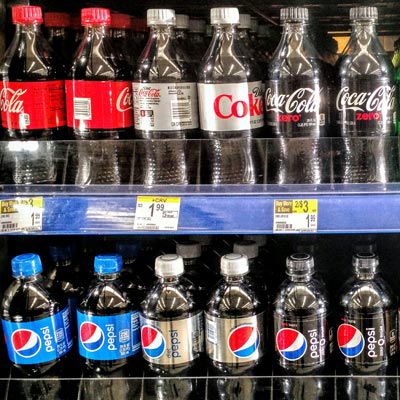 Soda taxes in several U.S. cities have produced mixed results, according to a series of new studies. While a tax in Seattle and a short-lived tax in Chicago reduced sugary drink sales, Philadelphia's soda tax didn't have a significant impact.
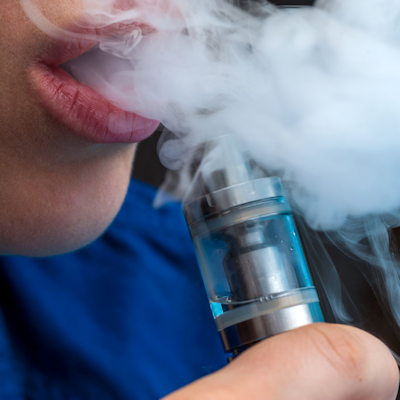 Vaping changes a user's oral microbiome and makes the mouth more prone to inflammation and periodontal disease, according to a new study from researchers at the New York University (NYU) College of Dentistry.
Tuesday, March 3, 2020
‘March Madness’ – Matched & making moves
Congrats to those of you who recently matched! The stress of that process has, hopefully, subsided, and now it’s time to think about what happens next.
This time of your career is critical. Staying involved in organized dentistry can provide that extra support you need, so the 163,000 members of the ADA have waived dues for 2020 graduates. Recent graduates get $0 ADA national dues* for 18 months after graduation. And if you are going into a graduate program, you can receive $0 ADA national dues* for the duration of your program. Sign up at ADA.org/SigningDay.
Regardless of where your plans take you after graduation, you can access ADA resources that can give you a strong foundation for your career, including:
- Dentist Employment Agreements: A Guide to Key Legal Provisions: Know the questions to ask and discussions to have before you sign.
- Manage debt: Find tips and tools on navigating student loans and debt.
- ADA Library & Archives: Access eJournals, eBooks, evidence-based tools, including MEDLINE, Cochrane Library, DYNAMed®, one-on-one research help and more.
- ADA CE Online: Access all current CE Online courses for free for two years following graduation and stay on the cutting-edge of learning. No promo code is needed; just log on to ADACEOnline.org and start taking courses at no charge.
- ADA Practice Transitions: Subscribe to the ADAPT blog, featuring the popular series “Transition Tales & Truths” and “What Went Wrong Wednesdays.”
Create a strong foundation for your career — maintain your ADA membership at ADA.org/SigningDay.
*state and local dues may apply
This blog post was sponsored by the American Dental Association.


Subscribe to:
Posts (Atom)