Three weeks ago, I packed my bags and flew across the country to attend the ADA FDI World Dental Congress. I had the honor of being chosen as one of ASDA’s student delegates to attend the meeting, and I was eager to represent dental students in the broader organized dentistry community. I had been to several dental conferences before, so I had an idea of what to expect, but I couldn’t have anticipated the sheer scope of the ADA Annual Session. Here’s a quick look at my week in San Francisco.
Unless my amateur swimming takes off, seeing the opening ceremonies of the ADA FDI World Dental Congress is as close to the Olympics as I’ll ever get. Thousands of attendees from all over the globe congregated to mark the beginning of the week’s festivities. As each country’s name was called out over the loud speakers, people from that country stood up to cheer, waving the tiny flags they brought with them just for the occasion. Going through the list of all the world’s countries took quite a bit of time but made for some excellent people-watching. My favorite moments? When one country’s name was called and only two people stood up, it was apparent that neither of them knew that the other was there, and they shared a moment of joyful recognition from across the crowd. At another point, a single representative from a country stood up, realized he was the only one there, turned around to face the crowd and took a very theatric bow.
Dr. Jeffrey Cole, ADA immediate past president, and Dr. Kathryn Kell, FDI immediate past president, served as the emcees for the ceremony. After Drs. Cole and Kell presented several awards in recognition of humanitarian efforts in dentistry, it was time for the keynote speaker: Mark Wahlberg. As hundreds of cellphones went up in the air to try to get a shot of our celebrity guest, a nice Australian woman sitting directly in front of me turned around and asked, “Are you just here to see Mark Wahlberg? Because, honestly, I am.”
Wahlberg talked with Drs. Cole and Kell about his childhood in Boston, his own experience with dentistry and his passion for addressing the opioid crisis. After the interview, fans rushed the stage in hopes of getting a selfie with Wahlberg. (“Here’s your chance — get up there,” said the Australian woman from before.)
The excitement of the opening session left the ASDA delegation ready to dive into the week ahead. As delegates and alternate delegates to the ADA House, the ASDA delegation had several key responsibilities. First was reviewing the resolutions that would be presented to the House of Delegates, and discussing if and how those resolutions affected ASDA membership. Many of the resolutions had little impact on dental students — for example, specifics of the ADA’s annual budget — but many did intersect with ASDA policy and dental student interests. Investigations into new ways of repaying student loan debt, for example, were debated, along with other items.
After meeting as a caucus, attending reference committee hearings and discussing the resolutions with dentists from our home states, members of our delegation sat on the house floor and cast our votes. If you’ve ever been to a meeting of ASDA’s House of Delegates at Annual Session, you’ll know exactly what this process looks like.
It is impossible to summarize the week in such a short format. I could go on and on about how our delegation met with and questioned candidates for the ADA president-elect, second vice-president and speaker of the house. How we saw the leadership turn over from Dr. Cole to the ADA’s new president, Dr. Chad Gehani. How we proudly saw ASDA executive director, Nancy Honeycutt, become an honorary member of the ADA. Suffice it to say that every hour of these few days was packed with activity.
All in all, I came away from this experience appreciating how much organized dentistry means to our profession and how much practicing dentists are eager for students to get involved. After you’ve gotten a taste of organized dentistry through ASDA, consider getting involved with your local or state dental societies. I guarantee, you’ll be glad you did.
~Jeannie Binder, Texas-Houston ’21, ASDA Editor-in-Chief

 Is your practice prepared for the additions, revisions, and deletions that will go into effect on January 1, 2020, to the Codes on Dental Procedures and Nomenclature (CDT)? This primer from CDA Practice Support will help your practice be ready for the changes.
 While it may make you feel better to have your hand in everything, as the practice's primary producer you can raise production dramatically by delegating all nonclinical responsibilities to staff members, according to Dr. Roger P. Levin. Delegating will also give your practice greater flexibility in daily operations and empower your team members to excel and take pride in their work.
 Safe, successful dental treatments in special needs patients depend on choosing the right anesthetic methods and equipment and having a skilled staff, according to the author of a recent study. Utilizing the appropriate anesthetic approach and taking serious precautions can reduce complications in these patients.
 If the first step in helping a patient is by asking them where it hurts, why shouldn't the same procedure apply to your practice? Curtis Marshall of Dental Intelligence writes that many practice owners don't identify the pain points in their practice. In the first of a two-part series, he helps identify these pain points and how to fix them.
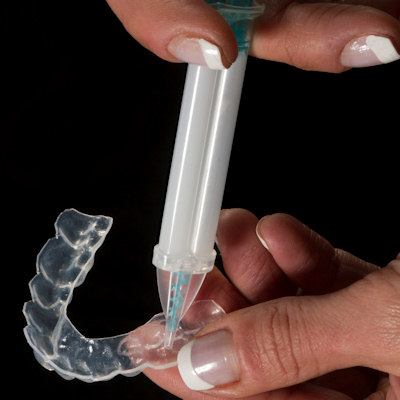 Using an electrokinetic flow method to whiten teeth offers a faster, equally effective alternative to other available light-diffusing treatments, according to a study published September 20 in Dental Materials.
 Since 2000, nearly 11% of all medical evacuations from combat environments were because of dental emergencies. so the U.S. military now encourages all personnel to practice good oral health and hygiene. A new profile of dental services available at the Walter Reed National Military Medical Center shows how military practitioners work to keep service members ready for deployment.
 Having gum disease puts people at greater risk of developing high blood pressure, according to a study published September 24 in the European Society of Cardiology's journal, Cardiovascular Research.
 Artificial intelligence (AI) can detect oral cancer and other diseases with similar levels of accuracy as healthcare professionals, according to a new review published on September 24. But the authors caution that dentists and physicians aren't in danger of being replaced by AI anytime soon.
 Every practice experiences a denial of their claims, but why does it happen, and how can you increase the likelihood that your appeal will be accepted? Dr. James Anderson of eAssist notes that there are common mistakes to avoid, like putting in the wrong codes or not having the necessary information. He outlines five practical ways your practice can improve immediately.
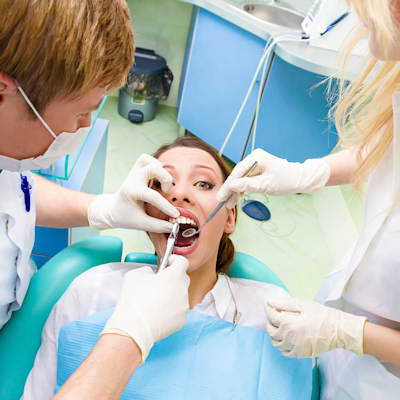 The number of severe dentistry failures that clinicians could have prevented, such as performing surgery on the wrong location, continues to climb. Wrong-tooth removals account for up to 10% of all preventable safety dental incidents, known as "never events," according to a new study.
 You have spent many years training to become a dentist, growing your practice, building your reputation, and developing a loyal patient base. It is now imperative that you take steps to protect your investment of time and money. Gary Salman, CEO of Black Talon Security, offers four steps to take to protect your practice against cybersecurity attacks.
 Should your patient get an implant or a root canal? Dr. Edward Harsini notes that this is a difficult conversation to have with a patient and requires the dentist to have an answer that incorporates both the patient's investment and medical history perspectives. An implant isn't always the right answer.
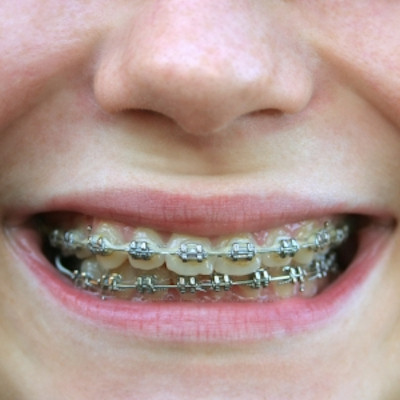 Patients may wonder why orthodontists chose certain treatments when they fix their misaligned teeth. While each patient's unique dental problems play the largest role in treatment, so do a number of other factors. Doctor and patient demographics also affect their decisions, according to a new study.
 A former dentist in the Washington, DC, area who is already in jail for sexually assaulting patients has pleaded guilty for his part in a scheme to defraud his local Medicaid program out of approximately $5 million.
 Children with autism experience fewer caries and decayed, missing, and filled teeth than their neurotypical peers, according to the findings of a new study. However, these children are prone to other oral health issues, including bruxism, dental anxiety, and soft-tissue trauma.
 Practices lose about 10% of their production because of no-shows, patient attrition, and other issues. How can your practice overcome or avoid these issues? Dr. Roger P. Levin details four areas to watch and offers easy-to-implement tips for improving your practice's performance.
 As policymakers in Washington, DC, explore ways to make dental care more affordable for approximately 60 million Medicare recipients, the Kaiser Family Foundation on September 18 issued a brief that outlined five possible ways they may achieve this goal.
 The U.S. Department of Health and Human Services' Health Resources and Services Administration (HRSA) has awarded about $85.3 million to nearly 300 government-funded health centers to expand their oral health service capacity through new and enhanced infrastructure.
 Two-thirds of children and adolescents with type 1 diabetes have dental caries, according to a systematic review published in BMC Oral Health on September 14 that analyzed cases that spanned 20 years. The authors recommended that these patients be screened for early signs of caries and receive preventive treatment during routine dental examinations.
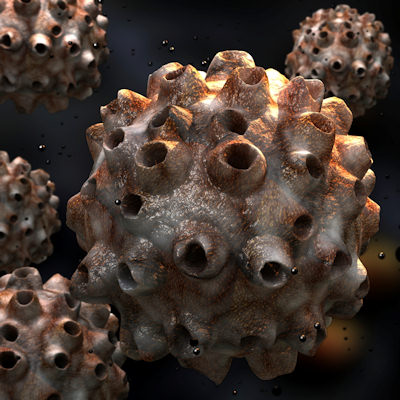 U.S. men are generally less knowledgeable than same-age U.S. women about HPV, the HPV vaccine, and the relationship between HPV and cancer, according to a study published on September 16 in JAMA Pediatrics. The findings highlight the importance of effective communication between practitioners and patients about the vaccine.
 As a practice owner, you want your marketing to convey the right image of your practice, writes Dr. Mikaeya Kalantari. But how do you know that a marketing firm is right for you? She specifies seven questions to help you wisely spend your marketing budget.