Friday, January 31, 2020
 A dentist in Spain was sentenced on January 26 to three years in prison and barred from practicing dentistry for three years for repeatedly secretly filming his receptionist change her clothes at his practice, according to news reports.
 A judge in Canada has granted a father the sole responsibility to decide whether his young sons receive necessary dental treatments and vaccines, despite objections from the children's mother, according to news reports.
 Dentists have been drilling and filling for decades, but what if one molecule could end this practice for good? Scientists have created a peptide with antimicrobial and remineralizing properties to help prevent and maybe even reverse tooth decay.
 Dental implants are a highly successful therapy and a must for treatment options in today's practice. Protocol for maintaining dental implants is now supported by a plethora of research, but you must stay up to date as changes happen frequently, advises Lisa Wadsworth, RDH. She examines the three-step process for proper dental implant maintenance.
Thursday, January 30, 2020
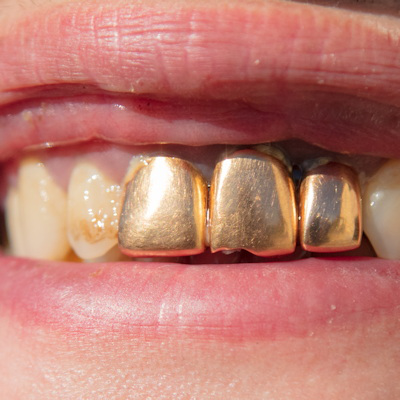 A dental grill purchased at a flea market in Texas caused severe tooth decay and rot for a woman who wore the decorative cover cemented on her front teeth for a year, according to a news report published on January 24.
 What is the best, most affordable way to get more phone calls to your dental practice? Practice marketing consultant Mike Pedersen explains what you should focus on to increase your calls and, ultimately, your revenues.
 Billing irregularities may have led to the University of Nevada, Las Vegas (UNLV) School of Dental Medicine overbilling patients and insurance companies by thousands of dollars, according to a January 23 article in the Las Vegas Review-Journal.
Wednesday, January 29, 2020
 Nine members of the U.S. House of Representatives have called on the U.S. Food and Drug Administration and the Federal Trade Commission to investigate SmileDirectClub to ensure that the clear-aligner company is not misleading consumers and harming patients.
How public speaking skills can impact you as a dentist
Public speaking is a part of everyday life. It is a form of communicating that allows us to effectively share our opinion and knowledge with those around us. If this is the case, then why do many shudder at the thought of public speaking?
Speaking in front of an audience can be daunting. Honing our skills as a public speaker is not only helpful for the stage, but also in more intimate spaces during doctor-patient interactions.
Dentists must effectively interact with patients, and this is a skill that comes with time and practice. Speaking with knowledge is one thing, but speaking confidently, compassionately and humbly about that knowledge takes your communication as a dentist to the next level. In this way, we discuss the oral health of our patients so they may understand and trust us to care for them. Dr. Nipa Thakkar, an ASDA alumna who has spoken at past National Leadership Conferences, shares some tips for honing your public speaking skills.
ASDA Blog: How do you learn to get over nervousness before public speaking?
Dr. Nipa Thakkar: I often get nervous before public speaking, but I remind myself that I am going on stage to speak to an audience as my authentic self and that the people in the audience have chosen to be there to hear what I have to say. My nerves would take over if I did not stop to give myself permission to be vulnerable and honest with my audience. Honesty makes life a lot less complicated in general, but as a speaker, it is absolutely critical to create an engaging and impactful presentation.
How does your skill in public speaking help you as a dentist, with patient communication?
I speak with my patients in the same way I [approach an audience of peers]. It’s never a sales pitch — health care providers are not snake oil salespeople. I want to educate, inform and, above all, listen. I have yet to run into someone who can fake authenticity. It isn’t worth the risk of ethical compromise, and the message is never as touching. I also think it is exhausting to be an encyclopedia during a conversation or a missionary for someone else’s truth. So, I’m honest and vulnerable. And I’d like to think my patients recognize that.
What are some tips about public speaking that dental students can use when they have to present or speak in public?
It’s important to prepare, pace yourself and breathe. Be a speaker you would want to hear. If you’re not a funny person, don’t use the stage as a chance to confirm that. If you speak too fast, recognize it and make a conscious effort to slow down throughout. If you ramble, time your thoughts and stop when you know you’ve made your point. Ask questions, take feedback and listen to your audience. Their body language and level of engagement will tell you how you’re doing.
The ability of public speakers to engage many different people at the same time amplifies their ability to have one-on-one interactions. A dentist who will be seeing many patients and personalities daily must be flexible, adapting the conversation to the personality of the patient. When people trust you and you establish good rapport, successful clinical outcomes can increase. Engaging the audience, having confidence in what we speak about, entering the room prepared, being aware of our body language as well as the patient’s, and speaking with authenticity and honesty allow for better patient encounters and oral health care overall.
~Thao Do, LECOM ’21
 In any successful practice, knowing your purpose and your numbers is essential. And when it comes to achieving your purpose, profitability is the key to growing your practice and achieving your financial goals, as well as securing your future and your retirement, write Kim McGuire and Fred Joyal in the first of a yearlong series by Fortune Management.
 Dr. Ryan Evans shares his experiences of working for a dental service organization (DSO) and the benefits that come with it in the second installment of our series featuring various team members from group practices.
 How far would you go to get an Oral-B electric toothbrush for almost nothing? A multimedia journalist took it to the limit when a Target manager in Massachusetts refused to sell him a display brush that was priced at 1¢.
Tuesday, January 28, 2020
 Let's talk about the oral-systemic link. We've been working on it in dentistry for decades now, but we still have a tremendous and untapped opportunity happening in dental practices all over the world, writes Dr. David Rice. He explains what this opportunity is and what dentists need to do to help patients and the medical community.
Exploring student loan options tailored for dental students
Last year, we heard from ASDA, current dental students and their financial aid officers that there was a need for a better option to cover the cost of dental school. We’ve also worked with thousands of doctors and dentists in our refinance business, so we knew the challenges they face in paying for school and wanted to help lower the cost.
At CommonBond, we’ve been supporting students with better student loans for years. We have deep experience working with investors to build programs that offer great rates to students based on their strong prospects. We are proud to continue offering our in-school loan option for dental students. In fact, dental students that borrowed last year with CommonBond are on track to save a significant amount of money.
A gap in the market
Many students are familiar with the Federal Grad PLUS loan. What most don’t realize, however, is that the federal government offers the same interest rate to all graduate students, regardless of the student’s course of study or future earning potential. The current Federal Grad PLUS loan carries a 7.08% interest rate and 4.236% origination fee. Dental students are not your average student, so a one-size-fits-all loan doesn’t seem right.
Dental students are a high-achieving, accomplished group. We recognize how competitive it is to get into dental school, the high rates of graduation, employment and strong earning potential. A dental career is a smart investment for you, and we believe it’s a smart investment for us because we understand the great prospects dental students have.
How CommonBond is different
CommonBond is a new kind of student loan company. We look at each borrower as an individual and use technology to offer dynamic pricing that’s personalized to your unique situation. In addition, while we were creating this new product, we worked with ASDA to build our student loan specifically for dental students. We thought there should be a better option that reflects the great prospects dental students have.
CommonBond’s dental loan variable interest rates start at 4.98% APR, and only carry a 2% origination fee.* A student who takes a 10-year fully deferred loan with CommonBond could save thousands of dollars over the life of the loan.** We’re excited to partner with the next generation of dentists and help today’s dental students invest in their future.
Your CommonBond loan is ready: Get started today.
~ Pete Wylie, Chief Operating Officer at CommonBond
*Offered terms are subject to change and state law restriction. Variable rates may increase after consummation.
**Savings of $7,994 assuming a $50,000 fully deferred 10-year loan with a 48-month deferral period plus a six-month grace period with a single disbursement with CommonBond loan at a fixed 6.08% APR and 2% origination fee versus a Federal Grad PLUS at an interest rate of 7.01% APR plus a 4.236% origination fee.
Loans are offered through CommonBond Lending, LLC (NMLS #1175900).
This article was sponsored by CommonBond.
 Procter & Gamble's Oral-B is investigating claims made by a New Zealand woman that she found shards of glass in a tube of its toothpaste, according to a statement released January 24 by the oral care company.
Tips to grow your Invisalign business
 Ryan Molis, DDS, believes he has cracked the code for dental practices to become successful while offering Invisalign products (Align Technology). He has founded his coaching business on this premise, and he has gathered quite the following from Invisalign providers in a very short amount of time.
Related Reading:
 After receiving a record number of votes from our community members, DrBicuspid.com is pleased to announce the winners of the 2019 Dental Excellence Awards, honoring the best new products and services in dentistry.
Monday, January 27, 2020
Gold Crown Award nominees for best Contour articles and blog post
Each year, ASDA publishes nearly 300 articles in Contour magazine and ASDA Blog combined — planned and written by dental students. Each piece of student-written content can be considered for a Gold Crown Award in the media category, which honors excellence in chapter publications, social media and websites, and outstanding contributions to ASDA national publications.
These are the nominees for the 2019 awards, for contributions to ASDA’s national publications. All content was judged based on the following criteria: relevance, originality, research, presentation (Contour) and online impact (ASDA Blog).
ASDA BLOG
Best Blog Post
The measles outbreak and modern health information accessibility
Richard Rodriguez, Texas A&M ’21
Changing the perception of dentistry: Q&A with ‘Queer Eye’ dentist
Katherine Hayes, Missouri-Kansas City ’22
Juneteenth: A celebration of freedom
Alexandria Evans, Texas A&M ’22
Motivational interviewing to improve patient outcomes
Joan Daniel, New England ’22
Analogies as an analgesic: Making painful conversations more comfortable
Rachel Bryant, Midwestern-Arizona ’21
CONTOUR
Best Feature Article
Connecting with LGBTQ patients
Corey Smigiel, Pennsylvania ’21
Using innovative marketing strategies in dentistry
Annce Shah Kadri, Boston ’22
Dental tourism
Laurel Fuentes, Harvard ’20
The Ensuring Lasting Smiles Act
Patrick Campbell, Marquette ’20
Editor’s Choice*
Coping with dental guilt
Jennifer Hoang, Texas-Houston ’20
Explaining the ‘Seniors Have Eyes, Ears and Teeth Act’
Kate McPherson, North Carolina ’20
Oral health barriers of the transgender community
Laura I. Perez Nunez, Puerto Rico ’22
Pass/fail curricula and student success
Tal Sastow-Robbins & Jose De La Guerra, Pennsylvania ’21
*This category includes magazine content outside of the feature well.
 Whether from patients or team members, constructive feedback can help you increase efficiency, profitability, and career satisfaction. Dentists should always make sure that both their patents and staff know that you value their opinions, advises Dr. Roger P. Levin in his latest Practice Success tip.
 North Carolina has amended its prior-exam rule, allowing public health dental hygienists to perform preventive dental procedures on patients who have not been previously evaluated by a dentist and without a dentist present. The rule change takes effect on February 1.
 A dental practice in Maryland has agreed to waive outstanding charges for services it provided during a two-year period and to pay $48,000 to resolve allegations that the office overbilled patients, according to the Maryland Office of the Attorney General.
Friday, January 24, 2020
 Last week, one of the most-read articles on DrBicuspid.com was about the Wisconsin dental assistant who claims she was fired after her pro-President Trump comments on Facebook led to a bad review of the dental practice where she worked. Paul Edwards of CEDR HR Solutions offers a human resources point of view of the case.
 A woman in Florida is suing a dental practice, claiming it used an automatic telephone dialing system to send her and other patients thousands of unsolicited texts, like "We are open today!" She says the barrage of messages was a nuisance, invaded her privacy, and violated U.S. robocall laws.
Thursday, January 23, 2020
 Rising levels of chronic disease, a workforce increasingly plagued by ill health, and skyrocketing medical costs -- these are just some of the health trends to watch in the next decade, according to a commentary in the January edition of the Journal of the American Dental Association.
Wednesday, January 22, 2020
Talking to your patients about consumer oral care products
The patient interview is one of the most critical parts of treatment planning and developing a rapport with our patients. Listening to our patients is a skill we should master, especially when they are telling us about the oral hygiene products they’re using at home.
As consumers, our patients are exposed to a wide variety of dental care options, and although it is not the product that determines the oral hygiene status, it is something we should not overlook. Patients commonly ask for advice on how to best maintain their oral health, which sometimes includes questions about specific products they have seen or heard about. In addition, they could be using unconventional forms of oral care or even trying out trends they come across on social media. This type of information may not be openly disclosed in the patient interview, which is why it’s important that we prompt them to discuss their home oral care habits. Then we can provide necessary intervention and give feedback in their continued effort to maintain oral health.
In addition to listening to our patients during the interview and asking the right questions about their hygiene routines at home, we must stay informed about the products available to them over the counter, just like we do with our prescription products. One way we can do this is by learning about products that carry the ADA Seal of Acceptance.
Established in 1931, the ADA Seal of Acceptance program evaluates the safety and efficacy of dental products. According to a 2017 survey conducted by the ADA, “two out of three consumers responded that the ADA Seal on a product simplifies their purchasing decision.” Products are available for consumer reference on the ADA website.
Oral health is influenced by many factors, so an individualized approach should be taken with every patient. The ultimate goal is to promote the integrity of our profession and, most importantly, provide what is best for our patients, which includes reliably recommending products and practices to help guide them. This discussion also can serve as an educational opportunity to help patients set realistic goals and outcomes when it comes to their everyday oral hygiene and ultimately improve our communication with them.
~Melissa Matick, LECOM ’22
 A dentist in Virginia was arrested for driving while intoxicated after he crashed his truck and got into a tussle with responding police. Prosecutors described the vehicle as a "pharmacy on wheels" because he was found carrying a bag filled with 150 pills, according to news reports.
 Many patients just don't make dental care a priority or fully understand the importance of routine checkups or recommended treatment. Practice management consultant Sally McKenzie shares her tips on how to help patients see the value of the care you provide -- and grow your practice in the process.
 The weather forecasters are predicting a "snowmageddon" this week in parts of the U.S. You have a full day of restorative and hygiene patients scheduled. What to do? In times like this, you have to think about the safety of both your team and your patients, advises Dr. Sheri Doniger.
Tuesday, January 21, 2020
 An Alaska dentist who was filmed pulling a sedated woman's teeth while riding a hoverboard has been convicted of reckless endangerment and Medicaid fraud, according to a press release issued by the Alaska Department of Law.
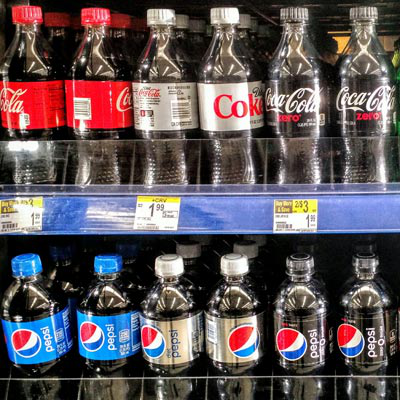 The sugar content of sodas sold in the U.K. is going down, according to new research published on January 13 in BMC Medicine. The reduction in sugar content is likely because of changing consumer habits, but also because a tiered tax law went into effect in 2018.
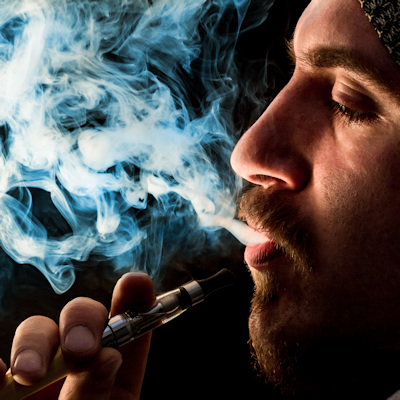 The recent outbreak of lung disease linked to vaping appears to be most prevalent in people who vaped THC-containing products obtained from informal sources, such as family, dealers, and online, according to a new report released on January 14 by the U.S. Centers for Disease Control and Prevention.
Monday, January 20, 2020
Ideas for making extra money while in school
As dental students, we rarely have time to take for ourselves, let alone to devote to a side job. Long eight-hour days, combined with the need to study for yet another exam, makes free time a precious commodity. However, there are a few ways to make some extra cash on the side without sacrificing too much time and effort.
Tutoring. This is a great option for dental students who want to make some extra cash while putting years of studying the biomedical sciences to good use. It’s also flexible; the hours depend only on tutor and student availability, which are generally similar. If you don’t know anyone you can tutor in person, apply for any online tutoring sites that provide services through a video call.
Selling crafts on Etsy. I know many people who have their own shops on Etsy (www.etsy.com) to sell different types of crafts they enjoy making. Not only are you able to spend time doing something you love; you also can sell some of those handmade items for profit.
Delivering food or groceries. Uber Eats, Postmates, Favor, Instacart … the list goes on for food delivery services. Driving for these usually only requires a short orientation and access to a car. You can choose your hours based on your schedule.
Selling your old clothes and books. We all have those clothes that don’t fit us anymore or the books that we haven’t read since high school. You may choose to donate these items. Another option is to sell clothes to stores such as Plato’s Closet or Poshmark, and books to stores such as Half Price Books. You may not earn glamorous amounts of money; however, a penny saved is a penny earned!
Doing freelance photography. If you’re into photography, establishing a portfolio to freelance as a photographer can provide a good stream of income. It is an investment; however, a hobby in photography can benefit you in the long run, and freelancing can be flexible.
The opportunities to make money are endless if you’re creative. These are only a few options for ways you can earn some extra change.
~Shilpa Kudva, Texas A&M ’21, ASDA Electronic Editor
Subscribe to:
Comments (Atom)