In this edition of Treloar Talks, I speak with Dr. Matthew Walker, a general dentist in Tahlequah, Oklahoma. Dr. Walker earned his bachelor’s degree from Northeastern State University and his dental degree from Oklahoma University in 2001. He has maintained a commitment to continuing education and has pursued advanced training in laser gum surgery (LANAP), cosmetic reconstruction and dental implant dentistry.
Blake Brownell: Tell us about your practice and the community you serve.
Dr. Matthew Walker: I’m a lifelong resident of Tahlequah, Oklahoma. It’s a community of about 20,000 people, but as the county seat for the larger area, it draws upon a population of about 45,000 to 50,000. It’s a somewhat underserved community. I practiced here for 10 years by myself before my brother joined me.
How did you and your brother start working together?
When my brother graduated dental school in 2009, he took a job with the Cherokee Nation that gave him Fridays off, so he would work in my practice on those days. The space I had for the practice was too small for both of us. After about two years, I decided to build a new facility — a 10 operatory practice. That’s when he joined full time, and we have been off to the races ever since.
What motivated you to take on that big project?
The bank was the first thing that kept me motivated. When I got out of dental school, I remember several of my classmates saying they felt it was too risky to go into a solo dental practice. And my thought was, well, I have about $10 to my name, so if the bank would loan me money, I’ll give it a shot — and I did. I bought a modestly sized practice from a dentist in Tahlequah.
The desire to succeed drove me more than anything else. It was fun, it was stressful and it was a little scary, but you hustle and go in every day, doing the best you can. Fortunately for me, it worked out well.
What allowed you to be successful early on?
The practice took off quickly because in that community at the time, there was a huge need for pediatric dental care, and few dentists addressed it. In dental school, I had a special interest in this area, and I participated in a pediatric honors program, which helped a lot. I also had interest in endodontics, a specialty that several dentists in our town did not offer. A few of them referred cases to me, which was helpful.
Being open to doing lots of different procedures helped me grow. Not that it was easy to learn all those skills — it wasn’t. But I’ve always thought that it’s important for general dentists to be well-versed in a variety of procedures to be able to serve their patients well, especially in a rural community like ours.
How have you expanded your practice and developed your skills throughout your career?
I’ve always felt a responsibility to provide all the technology and techniques that patients can access in communities larger than ours because that’s what people want and need. Granted, there are still patients willing to drive an hour and a half to go see a specialist, but most people would prefer to have those services right here in town.
I discovered that if I couldn’t offer a particular service, most often the patient wouldn’t get it done at all, even when I referred them to someone else. Now that I’m more experienced and skilled, I offer them the choice to do it here (if we offer it) or to go to another provider. Most times, they say, “If you can do it here yourself, please go ahead and do it.” My philosophy is to be honest and upfront with patients about our capabilities and their options. Every time someone has chosen to give me the opportunity to perform a procedure that’s new, it’s both motivated me and allowed me to expand my skillset.
Who has helped you along the way?
I was fortunate to have access to specialists willing to help me. I called them a lot when I was learning to perform new procedures. I told them what I was learning to do, but I also faithfully referred to them when I knew that my patients would be better served through them. I made a point to associate myself with people who are good in their chosen field and they, in turn, became good mentors.
Treloar & Heisel and Treloar & Heisel Property and Casualty are divisions of Treloar & Heisel, Inc.
Insurance products offered through Treloar & Heisel, Inc.
Treloar & Heisel, Inc. and its divisions do not offer career management advice. The information in this article is intended for general informational purposes only and does not guarantee career success. Please consult a professional concerning this topic.
19-061
~Blake Brownell, Director of Strategic Partnerships, Treloar & Heisel
This blog post was sponsored by Treloar & Heisel.

 Here are five tried and true strategies you can implement now to show your gratitude and support for all that office managers do, all while improving your practice when things return to normal, writes Christine Alfano.
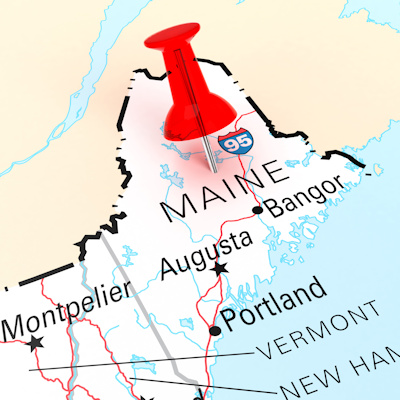 Dentists in Maine cannot legally engage in teledentistry during the COVID-19 pandemic, despite instruction from the state's governor to treat patients remotely, according to the Maine Board of Dental Practice.
 Dental consultant Sally McKenzie has put together a few tips to help dentists and team members better understand the financial situation of their business and what they need to do to survive the crisis caused by the COVID-19 pandemic.
 Every routine interaction between staff and patients contributes to the quality of the patient experience, for better or worse. Well-written and properly used, scripts can guide team members as they operate practice systems and also add depth and value to patient-practice relationships, writes Dr. Roger P. Levin in his latest Practice Success tip.
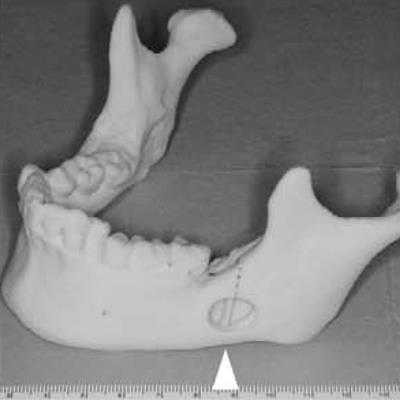 Radiography, CT, and 3D modeling helped clinicians remove burs that had broken off from high-speed handpieces during third-molar extractions and migrated to the mandibular body of one patient and the floor of the mouth of another, according to a recently published report of two cases.
 There is certainly no judgment here, but Dr. David Rice discusses why now is the time for dental practices to put the long-term health of dentists, team members, and patients ahead of the short-term goal of keeping a dental practice open during the coronavirus disease (COVID-19) pandemic.
 If dental professionals do not take adequate notes, capture an intraoral image, or take radiographs to document our diagnoses and support our treatment plans, we will not have the full benefit of factual clinical findings, writes Lisa Wadsworth, RDH.
 March 23 marked the 10-year anniversary of the signing of the Patient Protection and Affordable Care Act (ACA). Dental public health expert Nadereh Pourat, PhD, spoke with DrBicuspid.com about some of the oral health wins and losses from the biggest U.S. healthcare overhaul in 50 years.
 How do you get those dental assistants who are willing to go above and beyond for your practice each day? Find out what job factors matter the most when dental assistants are considering positions, and adjust accordingly to land the best and the brightest, writes Robynn Rixse, president of the American Dental Assistants Association.
 Patients who experience loss of taste and smell but are otherwise asymptomatic may be carriers of the novel coronavirus, causing the rapid spread of the outbreak, according to the British Association of Otorhinolaryngology -- Head and Neck Surgery.
 Recruitment strategy is like every other type of business strategy -- it is only as effective as the quality of inputs you have to form it. Unfortunately, COVID-19 creates a lot of uncertainty. With that in mind, Catrinel Hagivreta has five key recommendations to help you stay competitive when it comes to hiring practices.
 In her latest podcast, dental insurance expert Teresa Duncan breaks down what dentists and dental team members need to know about implementing teledentistry into their practices, including answers to frequently asked questions.

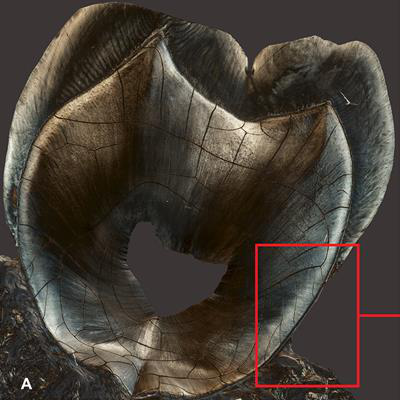 Teeth provide a true, permanent historical record of a person's major life events, including pregnancy, illness, relocation, and incarceration, according to a new study published March 25 in Scientific Reports.
 These days, many dental practices are seeing their business slowed because of the coronavirus disease (COVID-19) pandemic, but Dr. Sheri Doniger shares four ways to ensure your practice and team members stay productive.
 The SARS-CoV-2 virus that causes COVID-19 remains stable for several hours to days when it is aerosolized or on surfaces, according to a letter to the editor published online March 17 in the New England Journal of Medicine.
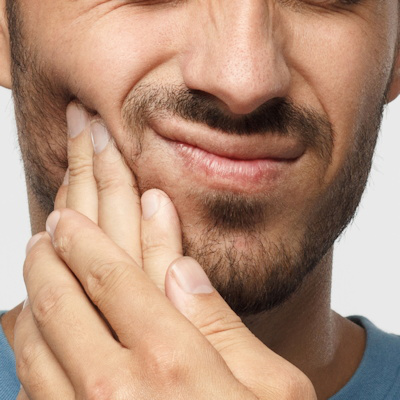 Patients who took opioids for pain relief after tooth extraction reported higher levels of pain than patients who took other analgesics in a new study, published in JAMA Network Open. The findings suggest nonopioid analgesics should be the first-line pain relief for extractions.
 During these unsettling times of the COVID-19 pandemic, it is crucial that we, as dental healthcare providers, provide the essential care necessary to our patients and communities through teledentistry, writes Dr. James Anderson.
 If you want a job as a superintendent, inspector, or assistant cadre with the Nigerian Immigration Service, you better not have any disabilities or physical flaws, such as crooked teeth, according to news reports.
 Chemicals found in cannabis or cannabinoids may be more effective at reducing bacteria associated with dental plaque than well-established synthetic oral care products, according to a recent study published in Cureus Journal of Medical Science.
 Do you want to get more children brushing their teeth before they go to bed? Encourage your young patients and their parents to pair nightly oral hygiene with book reading for at least three weeks, according to new research. For World Oral Health Day, the Smile organization has launched a behavioral science-backed campaign to get more children brushing before bedtime.
 An elephant in India has undergone a root canal to relieve pain from a longtime tusk injury. The elephant had 0.5 kg of flesh that grew within the fractured tooth removed prior to the procedure, according to news reports.
 How can you accurately pull reports in Curve Hero to track the productivity of staff members who are delivering dental services? Curve trainer Tracey Thompson offers some advice and best practices.
 A dentist in Maryland and an entrepreneur have won a retrial after being convicted in 2019 of conspiring to bribe Haitian officials in exchange for approving a proposed approximately $84 million project on the Caribbean island.
 It's no news flash that practice marketing has gone digital. But, are you doing it right? You must take advantage of the digital marketing triangle to do it effectively, writes Jonathan Miller and Fred Joyal.
 How should dental practices be using their social media channels to communicate with patients during the coronavirus outbreak? We asked dental social media expert Rita Zamora for advice in this podcast.